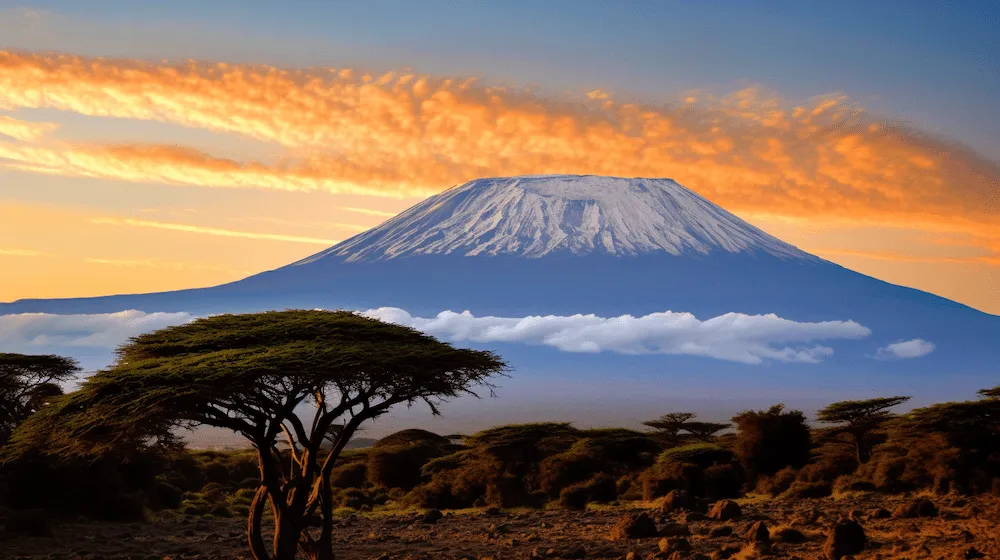


Mount Kilimanjaro is one of the most iconic mountains in the world. Rising above the plains of Tanzania, it attracts thousands of climbers every year. Its snow-capped summit, changing landscapes, and sense of achievement make it a true bucket-list destination.
However, many travelers still ask an important question. Is Mount Kilimanjaro active, and is it safe to climb? This concern usually comes from its volcanic origin. After all, Kilimanjaro is not just a mountain. It is a volcano. So naturally, people want to understand the risks before planning their climb.
In this guide, you will learn about the Mount Kilimanjaro last eruption, how the Kilimanjaro volcano formed, and what all of this means for Kilimanjaro climb safety today.
By the end, you will have a clear and confident understanding of what to expect.
Mount Kilimanjaro stands in northern Tanzania, close to the Kenyan border. At 5,895 meters, it is the highest mountain in Africa and the tallest free-standing mountain in the world.
Unlike many famous peaks, Kilimanjaro does not require technical climbing skills. Instead, trekkers reach the summit by walking, which makes it accessible to a wider range of travelers.
However, what makes Kilimanjaro truly unique is its structure.
The Kilimanjaro volcano consists of three main cones:
Kibo, the highest and most famous peak
Mawenzi, rugged and dramatic
Shira, now a wide plateau
Kibo is the only cone that is still considered dormant. Meanwhile, Mawenzi and Shira are extinct and show no signs of activity.
Because of this, the mountain remains stable and safe for climbers.
In addition, Kilimanjaro offers several climate zones. You begin in warm rainforest, then move through moorland and alpine desert, and finally reach icy summit conditions.
As a result, climbing Kilimanjaro feels like traveling across different worlds in a single journey.
To fully answer the question, “is Mount Kilimanjaro active,” we first need to understand how the mountain formed.
Kilimanjaro developed through volcanic activity linked to the East African Rift. This is a region where tectonic plates slowly pull apart. As a result, magma rises from deep within the Earth.
Over millions of years, repeated eruptions built up layers of lava and ash. These layers formed what geologists call a stratovolcano.
In simple terms, Kilimanjaro grew slowly over time through a series of eruptions.
First, Shira formed. Later, Mawenzi emerged. Finally, Kibo rose and became the tallest cone.
Because Kibo formed last, it is also the most geologically recent and the only one still considered dormant.
One of the most common concerns travelers have is about the Mount Kilimanjaro last eruption.
So, when did Kilimanjaro last erupt?
Scientific research shows that the last major eruption occurred around 360,000 years ago. After that, Kibo continued to show minor volcanic activity until about 200,000 years ago.
Since then, there has been no eruption.
This is a key point. While Kilimanjaro has a volcanic past, it has been inactive for a very long time.
Because of this, experts classify the mountain as dormant rather than active.
Therefore, there is no evidence suggesting that another eruption is likely anytime soon.
Now we can answer the main question clearly.
Is Mount Kilimanjaro active?
No, it is not active.
Kilimanjaro is considered a dormant volcano. This means it has not erupted in a very long time and shows no current signs of activity.
Scientists continue to monitor the mountain. However, all data confirms that it remains stable.
As a result, there is no volcanic risk for climbers.
This is important to understand. Many people confuse “volcanic” with “dangerous.” However, in this case, Kilimanjaro’s volcanic activity belongs to the distant past.
Today, the mountain is safe to explore.

At the summit of Kilimanjaro, you will find the Kibo crater.
This crater is one of the clearest signs of the mountain’s volcanic history. It is wide, quiet, and completely dormant.
When you reach the top, you can look across this vast landscape and see the remains of ancient volcanic activity.
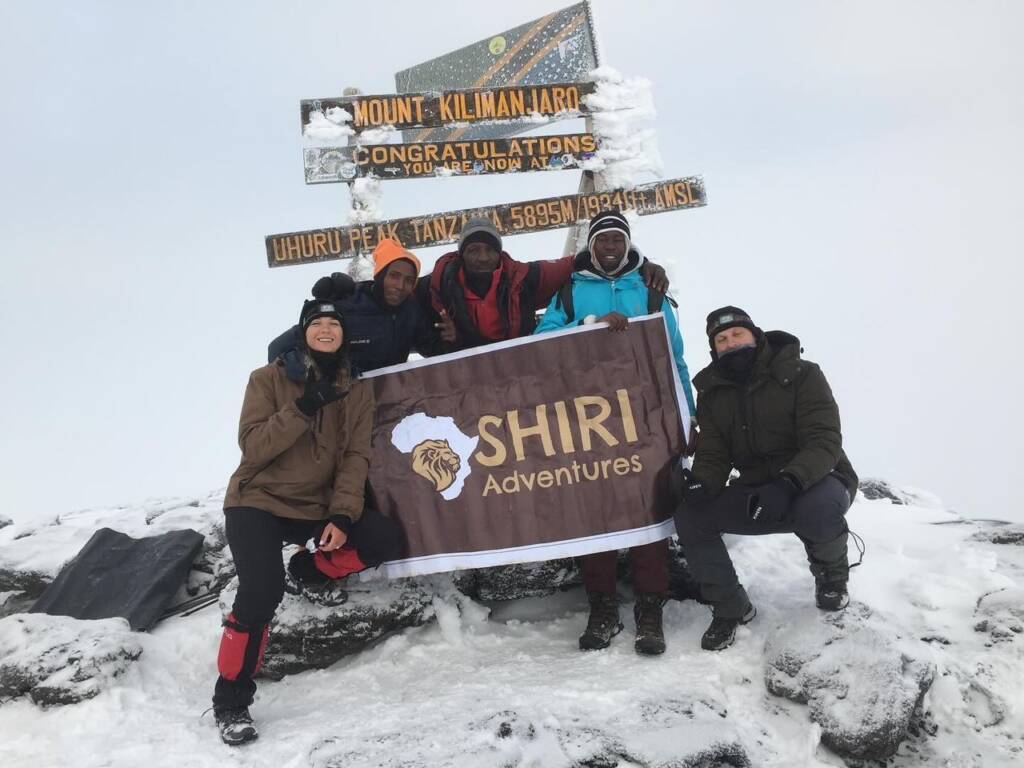
In addition, you may notice glacier remnants inside the crater. Although these glaciers are shrinking, they still add to the beauty of the summit.
For many climbers, this moment is unforgettable. It combines physical achievement with a deep connection to the Earth’s history.
Now that we understand the Kilimanjaro volcano, let’s focus on what really matters for climbers.
Kilimanjaro climb safety does not depend on volcanic activity.
Instead, the main challenges are altitude, weather, and preparation.
As you climb higher, the air becomes thinner. This can lead to altitude sickness if your body does not adjust properly.
Therefore, acclimatization is the most important factor for a safe climb.
To improve your chances of success:
Choose a longer route for better acclimatization
Walk slowly and maintain a steady pace
Stay hydrated throughout the trek
Listen to your guide’s advice
In addition, weather conditions can change quickly. Temperatures drop significantly as you approach the summit.
Because of this, proper clothing and gear are essential.
Most importantly, always climb with experienced guides. They provide support, monitor your health, and ensure your safety.
With the right preparation, Kilimanjaro remains a safe and achievable adventure.
Even though the Mount Kilimanjaro last eruption happened long ago, its volcanic history still plays an important role today.
For example, volcanic soil around the mountain is extremely fertile. This supports forests, farms, and local communities.
As you climb, you will see how the landscape changes. Each zone reflects the mountain’s geological past.
From dense rainforest to rocky alpine desert, every stage tells part of Kilimanjaro’s story.
In addition, this diversity supports a wide range of plant and animal life.
Because of this, Kilimanjaro is not just a mountain. It is a living ecosystem shaped by its volcanic origins.
Kilimanjaro also has deep cultural importance.
Local communities, especially the Chagga people, have lived on its slopes for generations. They rely on the mountain’s fertile land for farming.
Coffee and banana plantations are common in this region.
In addition, the mountain holds spiritual meaning. Many local traditions and stories are connected to it.
As a result, climbing Kilimanjaro is not only a physical journey. It is also a cultural experience.
If you are considering climbing Kilimanjaro, preparation is key.
First, choose the right route. Popular options like Machame and Lemosho offer good acclimatization and scenic views.
Next, train your body. While the climb does not require technical skills, it does require endurance.
In addition, pack carefully. You will need clothing for both warm and freezing conditions.
Also, plan enough time. Rushing the climb increases the risk of altitude sickness.
Finally, work with a trusted local operator. This ensures safety, proper logistics, and a better overall experience.